Introduction
Air fryers have become increasingly common in kitchens over the past several years, and for good reason. The basic appeal lies in their ability to prepare foods with minimal oil while achieving results that satisfy people looking for faster cooking methods than traditional ovens. Among the various options on the market, larger capacity models address a specific need—household cooks who want to prepare larger quantities or work with bigger food items without cooking in batches.
The Nutrichef 5.8 quart air fryer represents one entry in the large-capacity segment of the market. Understanding what this model offers, how it compares to other approaches, and whether its features align with your cooking goals requires looking beyond marketing language and examining the practical aspects of what it’s designed to do.
What Makes a Large Capacity Air Fryer Different
Before diving into the specifics of this particular model, it helps to understand what capacity means in the air fryer space. A 5.8 quart volume translates to substantial cooking space—considerably larger than compact models that typically range from 2 to 4 quarts. This extra capacity changes how people can use the appliance. Instead of cooking chicken wings in two separate batches, you might prepare them all at once. Fish fillets, potato fries, or vegetables can be spread out with proper air circulation rather than crowded together.
The trade-off, of course, is counter space. Larger air fryers occupy more room, which is worth considering if you’re working with limited kitchen real estate.
Key Features and What They Mean
Preset Cooking Modes
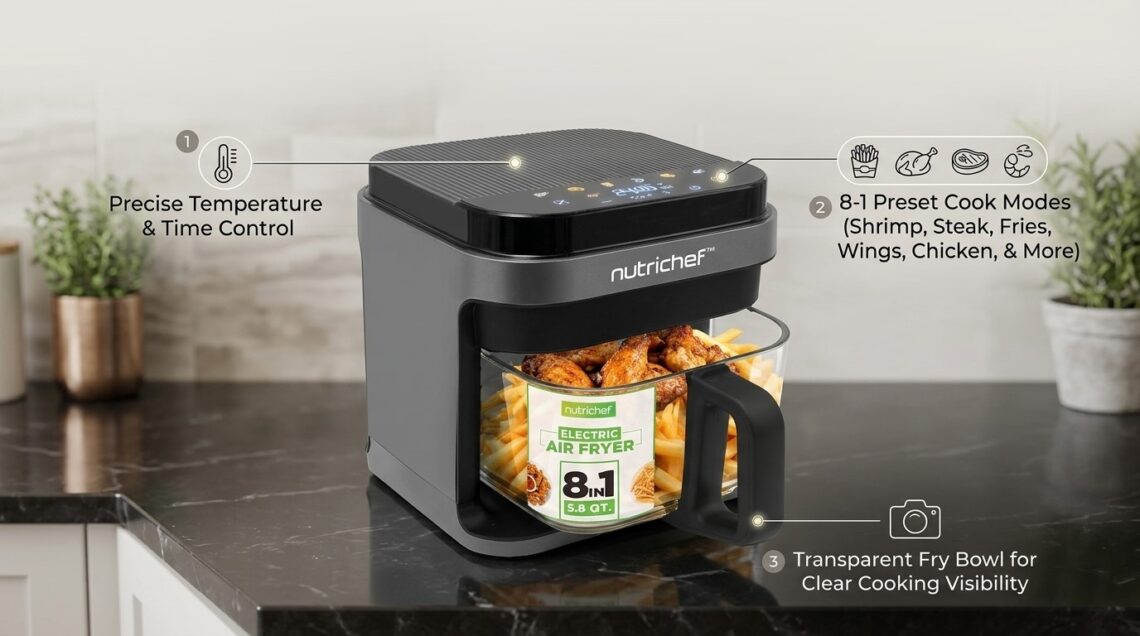
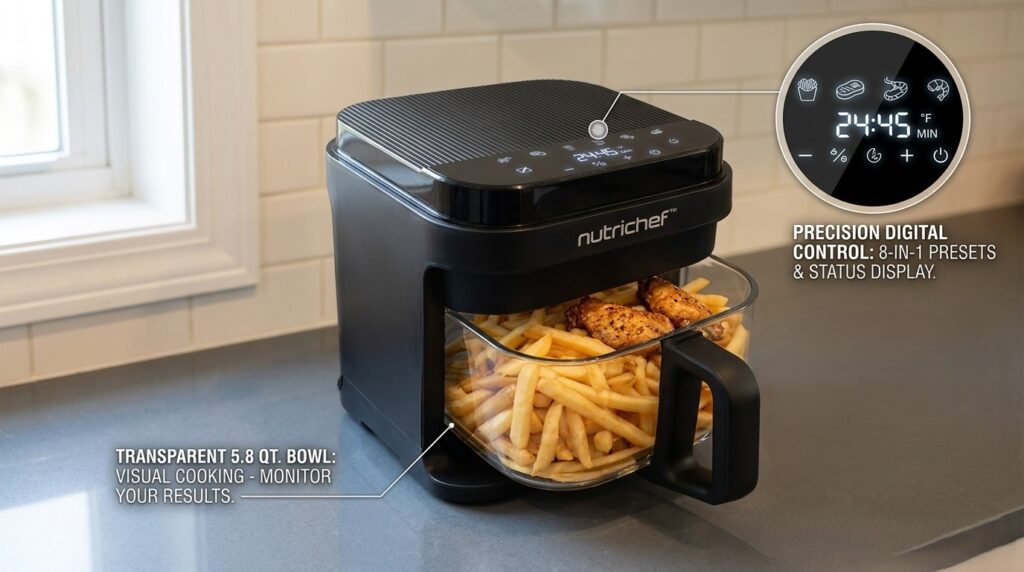
The eight preset cooking modes represent an attempt to simplify the cooking process. Rather than manually adjusting temperature and time for each food type, these modes provide pre-programmed settings designed for common items. The presence of modes for items like shrimp, steak, fries, wings, and chicken suggests the appliance is configured with multiple protein and vegetable options in mind.
How useful these presets prove depends largely on your cooking style. Some people find them genuinely helpful as a starting point, while others prefer adjusting temperatures and times manually based on specific recipes or personal preferences. Neither approach is inherently better—it’s a matter of individual workflow.
Transparent Fry Bowl
A transparent cooking bowl offers a practical advantage: visibility. Rather than opening the unit to check progress (which can affect cooking and heat consistency), you can simply look through the bowl to monitor how food is browning and crisping. This is particularly useful when learning how an appliance behaves, as you can observe the process without interruption.
Transparency also allows for easier cleanup inspection—you can see if residual oil or food particles remain before washing. Durability is worth considering with transparent bowls; they can be more prone to scratching than opaque alternatives, though most modern transparent bowls are made from materials designed to resist this.
Temperature Control and Timing
Precise temperature control ranging through typical cooking temperatures and adjustable timing allow you to adapt recipes or experiment with different foods. This flexibility means you aren’t locked into whatever presets offer. If a recipe calls for a specific temperature or time variation, you have the ability to dial in those parameters.
The relationship between temperature accuracy and cooking results matters more than some realize. Consistent, reliable temperature maintenance helps ensure that results are repeatable and that you develop familiarity with how the appliance behaves over time.
Grey Finish and Build Quality
The color choice is primarily aesthetic, though it’s worth noting that manufacturers often choose finishes based on heat management and durability considerations. A grey exterior finish is relatively common across kitchen appliances and typically signals a focus on practicality over design trends. The size and construction of the unit suggest it’s designed for regular household use rather than commercial application.
Practical Applications and Cooking Ideas
A 5.8 quart capacity opens up possibilities that smaller air fryers can’t accommodate. Here are some realistic ways people use large-capacity models:
Protein Preparation: Cooking several chicken breasts, a full batch of wings, or multiple fish fillets at once represents a common use case. This matters if you’re meal prepping or cooking for a family, as you’re not constrained to small portions.
Vegetable Roasting: Larger batches of Brussels sprouts, broccoli, or other roasted vegetables can be prepared simultaneously. The basket space allows vegetables to spread out, which generally improves browning and texture compared to crowded smaller baskets.
Frozen Foods: Larger frozen items like bigger cuts of meat or substantial portions of frozen fries can fit more comfortably. Some people find they prefer preparing frozen items in air fryers compared to ovens, citing faster cooking times.
Pastries and Baked Items: Beyond savory applications, some people use air fryers for items like donuts or small pastries. The larger capacity means you’re not limited to cooking tiny batches.
Mixed-Food Cooking: With adequate space, you might cook proteins alongside vegetables in the same cycle, provided they require similar cooking times and temperatures.
Reheating: Larger capacity also simplifies reheating multiple items together without stacking, which can improve texture compared to tightly packed arrangements.
The key practical advantage across these applications is time efficiency—cooking larger quantities in a single cycle rather than sequentially reduces total cooking time and energy use.
Who Might Find This Model Suitable
Larger Households: Families of four or more often find that smaller air fryer capacities require cooking in multiple batches, which extends meal preparation time. A larger model addresses this constraint.
Regular Meal Prepping: People who dedicate time to preparing multiple meals in advance benefit from capacity that accommodates substantial portions. This is particularly relevant if you’re preparing proteins and vegetables for the week.
Home Entertaining: Preparing appetizers or sides for gatherings becomes more feasible with a larger capacity. You can prepare more at once without requiring additional appliances running simultaneously.
People Preferring Visual Feedback: If you like watching your food cook, the transparent bowl provides that capability, which appeals to those who like understanding how their appliances work.
Households with Limited Oven Time: In situations where multiple people might need to cook simultaneously, an air fryer provides an additional cooking surface that doesn’t require traditional oven space.
Individuals Interested in Oil-Minimal Cooking: While air fryers aren’t truly oil-free, they use significantly less oil than deep frying or many pan-cooking methods. The capacity to cook larger quantities while using minimal oil appeals to people prioritizing this approach.
Important Considerations Before Purchasing
Counter Space Reality: A 5.8 quart model isn’t small. Measure your available counter space honestly. A unit that forces you to constantly move it or store it away in cabinets becomes inconvenient regardless of its capabilities.
Power Requirements: Larger air fryers draw more electricity than compact models. Check your kitchen’s electrical setup and available outlets. You shouldn’t run this on an extension cord—it needs direct outlet access.
Learning Curve: While presets simplify initial use, every air fryer behaves slightly differently. The first few weeks involve understanding how this particular model browns foods, how quickly it cooks various items, and what adjustments work for your preferences.
Maintenance and Cleaning: A transparent bowl requires careful cleaning to maintain clarity. Non-stick coatings need appropriate care to avoid scratching. Budgeting time for proper maintenance helps the appliance maintain performance over time.
Heat Exhaust: Air fryers produce exhaust and heat. Ensure there’s adequate space around the unit for proper ventilation. Placing it directly under cabinets or in enclosed spaces can affect performance and safety.
Food Arrangement Matters: Capacity doesn’t mean you can cook any arrangement of food perfectly. Items still need air circulation, so extremely crowded loading reduces cooking quality. Understanding proper load density takes experimentation.
Not a Complete Oven Replacement: While air fryers excel at certain applications, they can’t do everything a traditional oven does. Certain recipes, particularly those requiring large flat surfaces or extensive baking, still need conventional ovens.
How Large-Capacity Air Fryers Compare to Other Cooking Methods
Versus Traditional Deep Frying: Air frying uses 80-90% less oil than traditional deep frying while producing similar textural results for many foods. The trade-off involves some texture differences that people notice and evaluate differently based on personal preference.
Versus Conventional Ovens: Air fryers typically cook faster than conventional ovens because they use rapid air circulation in an enclosed space. However, they’re limited to smaller portions and don’t accommodate large roasts or sheet pans of cookies. Conventional ovens offer more flexibility in terms of quantity and food types.
Versus Toaster Ovens: Larger capacity air fryers occupy similar counter space as toaster ovens but typically cook with more speed due to the air circulation technology. Toaster ovens might offer more surface area for certain preparations, while air fryers excel at browning and crisping.
Versus Stovetop Cooking: For items like chicken wings or vegetable preparations, air frying eliminates splashing and oil splattering, making it less messy than pan-cooking. However, stovetop methods offer more hands-on control and work for preparations requiring liquid cooking environments.
Each method has legitimate applications. The relevant question is which aligns with how you actually cook and what results you prioritize.
Frequently Asked Questions
What kinds of foods work well in large air fryers? Foods that benefit from browning and crisping generally work well—proteins like chicken, fish, and beef; vegetables; frozen items; and some baked goods. Foods requiring liquid cooking environments or very large flat surfaces are less suitable.
How much electricity does a 5.8 quart air fryer use? Most large air fryers consume between 1400-1700 watts during operation. For reference, this is comparable to a microwave or toaster oven. Running times are typically 15-30 minutes for most foods, so total energy consumption per meal is relatively modest.
Can you cook multiple different foods simultaneously? Yes, if they require similar cooking times and temperatures. You can cook vegetables and protein together, for instance. Items requiring different temperatures need to be cooked separately.
Do air-fried foods taste different from traditionally fried foods? Most people find them very similar for certain items, though some texture differences exist. Potatoes fries, chicken wings, and vegetables often receive favorable comparisons. Items traditionally deep-fried sometimes produce slightly different results, which people evaluate differently based on their preferences.
How often does the transparent bowl need replacing? With proper care, transparent bowls generally remain functional for years. Scratching is the primary concern; deep scratches can affect visibility and potentially affect non-stick coating durability, but minor surface scratches don’t typically impact performance.
What’s the learning curve for using air fryers? Initial meals involve some adjustment as you learn how this specific model performs. After cooking 5-10 meals, most people develop a good sense of timing and temperature adjustments. Some experimentation is normal and expected.
Can you stack food in the basket? Generally, no. Stacking prevents air circulation, which is what makes air fryers effective. Food should be arranged in a single layer with space between items. This is where larger capacity becomes valuable—you need less stacking because you have more horizontal space.
Is an air fryer worth the counter space for a small household? This depends on cooking patterns. Small households cooking infrequently might find a smaller air fryer or alternative methods more practical. Households cooking regularly might appreciate the efficiency even if portions are small.
Maintenance and Longevity
Caring for an air fryer appropriately extends its functional life. The transparent bowl should be hand-washed or washed in a gentle cycle; abrasive scrubbing can cause scratching. The heating element shouldn’t contact water—wiping the interior with a damp cloth when necessary is sufficient. Regular cleaning prevents buildup that can affect performance or create smoke during cooking.
Proper ventilation around the unit while it operates maintains optimal performance and safety. Like any electrical appliance, keeping it away from water sources and using it as intended contributes to reliability.
Final Thoughts
The Nutrichef 5.8 quart air fryer addresses a specific need—the desire to prepare larger quantities of food quickly using minimal oil in a contained appliance. Whether this specific model makes sense for your situation depends on your cooking habits, available space, and priorities around food preparation methods.
The combination of substantial capacity, multiple preset options, temperature control, and a transparent bowl represents a fairly complete feature set for a large-capacity model. The question isn’t whether these features are “good”—it’s whether they align with your actual needs and how you prepare food at home.
Taking time to honestly assess your kitchen space, cooking patterns, and what results you prioritize helps inform this decision better than reviews or specifications alone.