Air fryers have become a staple in modern kitchens, and with good reason. They offer a faster cooking method than traditional ovens while using significantly less oil than deep frying. But when you’re looking at larger capacity models, the decision becomes more nuanced. The BOSWELL Glass Air Fryer with its 7.5-quart transparent frying bowl represents an interesting entry in the market for people seeking a bigger appliance. This guide explores what this model offers and how it fits into the broader landscape of air frying options.
What Makes Glass Air Fryers Different?
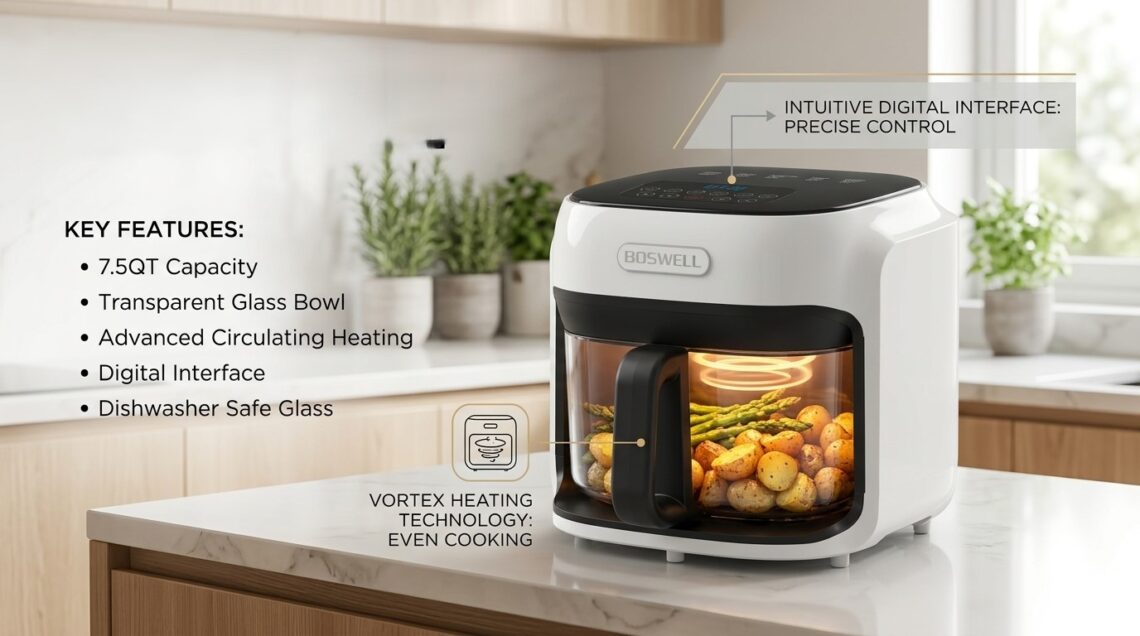
The most distinctive feature of the BOSWELL model is immediately obvious: the transparent frying bowl. Unlike traditional opaque baskets, this glass design allows you to monitor your food without interrupting the cooking process. This transparency serves a practical purpose beyond just visibility. Being able to watch your food as it cooks helps you understand how your appliance operates and gives you confidence in the cooking process, especially if you’re new to air frying or experimenting with new recipes.
Glass bowls also offer a different experience in terms of heat distribution and visibility of the cooking surface. The transparent design means you’re not opening the basket repeatedly to check on progress, which maintains consistent temperatures and reduces cooking fluctuations.
Key Features and What They Mean for Everyday Use
The 7.5-Quart Capacity
A 7.5-quart air fryer sits firmly in the larger-capacity category. To put this in perspective, many standard countertop air fryers range from 2 to 5 quarts. This expanded volume makes a tangible difference in how you cook.
With a larger capacity, you can prepare meals for bigger households without cooking in batches. If you regularly cook for six or more people, this size eliminates the need to prepare food in multiple rounds. It’s also useful if you like to cook components together—perhaps roasted vegetables alongside chicken or fish—when you might otherwise be limited by space.
That said, capacity comes with tradeoffs. Larger air fryers require more counter space, and they’ll consume more energy when operating. They also take up more room in your kitchen, so before committing to this size, assess whether you have adequate space and whether you’ll actually use the full capacity regularly.
Transparent Fry Bowl Design
The glass construction offers several practical advantages. First, there’s the visibility factor we mentioned. You can see exactly how your food is browning without opening the appliance. This is particularly helpful when you’re learning how different foods respond to air frying temperatures, or when you’re cooking something for the first time.
Second, glass is generally easy to clean compared to some other materials. Most glass air fryer bowls can be removed and washed, and many users find them simpler to maintain than traditional wire baskets that can have buildup in harder-to-reach spots.
The visual element also connects you to your cooking in a way that traditional opaque models don’t. Some people find this more engaging; others don’t particularly care about watching their food cook. It’s worth considering how much this feature matters to you personally.
Circulating Heating Technology
Air fryers rely on rapid air circulation to cook food, and the BOSWELL uses what’s described as circulating heating. This heating method pushes hot air around the cooking chamber at high speeds, creating the characteristic texture that makes air-fried foods appealing—a crispy exterior with a tender interior.
The efficiency of this circulation affects how evenly food cooks. Good air circulation should mean more consistent results across different items cooked simultaneously. However, how well this works in practice depends on many factors, including how you arrange your food in the basket, what temperature you’re using, and the specific food items themselves.
One consideration with larger air fryers is whether air circulates equally throughout the entire chamber. In some larger models, items closer to the heating element cook faster than those farther away. Rotating food or rearranging items partway through cooking can help with even browning, though this does interrupt the cooking process.
Temperature Control
The ability to adjust temperature is essential for versatility in air frying. Temperature control allows you to adapt to different foods and desired outcomes. You might use higher temperatures for items that need crispy exteriors and higher heat to brown quickly, while lower temperatures work better for foods that need gentler cooking to avoid overcooking the outside before the inside is done.
Most air fryer models offer a temperature range, and understanding the full range available with this unit helps determine what cooking tasks are realistic. Can you go low enough for delicate foods like fish or tender vegetables? Can you reach high temperatures for achieving deep browning on meats? The flexibility of the temperature range affects what you can realistically prepare.
Roasting Capability
While “air fryer” might sound limited to fried preparations, many modern units handle roasting quite well. Roasting in an air fryer generally produces faster results than a traditional oven because of the compact space and concentrated heat. Vegetables, chicken, and other foods can be roasted with good results.
The BOSWELL’s size means you can roast larger quantities than you might in a smaller air fryer, making it practical for actual meal preparation for groups. Roasted vegetables, for instance, are a common side dish that many households prepare regularly, and having adequate space makes this more convenient.
Roasting is distinct from air frying in that it typically doesn’t require oil (though you can add it for browning), and the results are different—less crispy, more evenly cooked throughout. Understanding this distinction helps you plan what to cook and how.
Dishwasher-Safe Design
Cleanup convenience affects how often you’ll actually use any kitchen appliance. When parts are dishwasher-safe, it removes friction from the usage equation. You’re more likely to use an appliance regularly if cleanup is straightforward.
The BOSWELL’s dishwasher-safe bowl and components mean less hand-washing and scrubbing. This is a practical feature that shouldn’t be overlooked, especially if you cook frequently or have limited time for kitchen maintenance.
How People Actually Use Large Air Fryers
Understanding real-world applications helps you evaluate whether this appliance fits your cooking style.
Cooking for Families and Groups
Households with multiple people benefit from larger air fryers simply because of the volume. You can prepare complete meals without cooking sequentially. This is particularly useful for weeknight dinners where you want to get everything done efficiently.
Meal Prep and Batch Cooking
People who practice meal prep often choose larger air fryers because they can prepare multiple servings of proteins and vegetables at once. Cooking chicken breasts for the week, roasting a batch of vegetables, and preparing other components becomes more practical with a 7.5-quart capacity.
Entertaining and Gatherings
If you host dinners or gatherings regularly, having the ability to prepare larger quantities without multiple rounds is appealing. It also frees up oven space for other components of your meal.
Replacement for Traditional Oven Cooking
Some people use large air fryers as a faster alternative to conventional oven cooking for everyday items. Roasting vegetables, cooking chicken pieces, and similar tasks happen faster and with less energy consumption than using a full-sized oven.
Experimentation with New Cooking Methods
If you’re transitioning from traditional cooking methods to air frying, a larger model with good temperature control supports experimentation across different types of food.
Who This Model Might Suit
Certain household situations and cooking preferences align well with larger air fryer investments.
Large Households
If you regularly cook for six or more people, the capacity matters. You won’t be as limited by batch cooking.
People Who Cook Frequently
Those who prepare multiple meals per week benefit from the convenience and speed that air fryers offer. If you’re not cooking regularly, the upfront investment and counter space might not make sense.
Home Cooks Seeking Kitchen Efficiency
People interested in reducing cooking times and energy consumption find air fryers appealing. Faster cooking means less time standing over the stove.
Those Transitioning from Traditional Ovens
If you’re looking to shift your cooking patterns and need flexibility with temperature control and food visibility, the transparent design and adjustable temperatures support this transition.
Households With Limited Oven Space
In kitchens where the conventional oven is frequently occupied or undersized, a large air fryer provides additional cooking capacity without major renovations.
Practical Considerations Before Purchasing
Counter Space and Storage
A 7.5-quart air fryer occupies meaningful counter real estate. Measure your available space carefully. Consider not just width and depth, but also height—you need clearance above the unit for steam to escape and for safety during operation.
If counter space is limited, think about where you might store it if you remove it when not in use. Some people keep their air fryers on a rolling cart or in a cabinet, but accessibility affects how often you’ll actually use it.
Electrical Requirements
Larger air fryers draw more power than small appliances. Check your kitchen’s electrical setup. If you’re already running multiple appliances on the same circuit, you might experience issues. Most kitchen designers recommend dedicated circuits for high-power appliances.
Learning Your Appliance
Air fryer cooking isn’t complicated, but it’s different from conventional cooking. Temperatures and times differ from oven recipes. You’ll experience a learning phase where you adjust recipes and techniques. Some people enjoy this experimentation; others find it frustrating.
Cleaning Routine and Maintenance
Even though the bowl is dishwasher-safe, the air fryer unit itself isn’t submerged. You’ll still need to wipe down the exterior and interior heating elements periodically. Plan this into your regular kitchen maintenance.
Heat Output and Kitchen Temperature
Air fryers generate significant heat during operation. In warm climates or during summer months, running a large air fryer in your kitchen will increase ambient temperature. This might affect your cooling costs.
How Large Air Fryers Compare to Other Cooking Methods
Understanding where air fryers fit in the broader cooking landscape helps you make informed decisions.
Versus Traditional Ovens
Conventional ovens heat an entire enclosed space, which takes time. Air fryers heat a smaller chamber and circulate hot air aggressively, generally producing faster cooking times. However, ovens offer better options for baking and certain delicate preparations. Most households benefit from having both rather than viewing them as direct replacements.
Energy consumption is lower with air fryers for the same food in most cases, though this depends on how full you’re utilizing the space and how often you use the appliance.
Versus Countertop Convection Ovens
Larger convection ovens are similar to air fryers in some ways—they use air circulation for cooking. However, convection ovens typically cook at slightly lower speeds and with less aggressive circulation. They often have larger capacities than air fryers but take up comparable counter space. The choice often comes down to specific cooking preferences and food types.
Versus Instant Pot and Multi-Cookers
Instant Pots and similar multi-cookers offer diverse cooking methods including pressure cooking, steaming, and slow cooking. Air fryers do one thing well: use circulating heat for fast cooking. If you want versatility in cooking methods, a multi-cooker offers more. If you specifically want speed and crispiness, air fryers excel. Many households use both for different purposes.
Versus Deep Frying
Traditional deep frying uses oil to transfer heat and create texture. Air frying mimics some results with minimal oil. Deep-fried foods often have a different texture and flavor profile than air-fried versions. For some applications, people prefer traditional frying; for health-conscious cooking, air frying offers advantages. You don’t get identical results, but for most home cooking purposes, air frying is sufficient and more practical.
Frequently Asked Questions
Q: Is an air fryer worth the counter space?
This depends entirely on your cooking habits. If you cook frequently and have household size or batch cooking needs, yes. If you rarely cook or have abundant oven options already, probably not. Consider your actual usage patterns before deciding.
Q: Can you cook frozen foods directly in an air fryer?
Most frozen foods can be cooked in air fryers, often without thawing. However, cooking times and temperatures may differ from fresh versions. The appliance needs good air circulation around food, so ensure frozen items aren’t overcrowded.
Q: How much oil do you need to use?
Air fryers require minimal oil—often just a light spray or coating. This is one of their primary advantages over deep frying. Some foods cook fine with no added oil; others benefit from a small amount for browning and flavor.
Q: What’s the learning curve like?
Most people adapt to air frying within a few cooking sessions. Recipes designed specifically for air fryers are widely available online. Converting traditional recipes requires adjustments to temperature and time, typically reducing both by about 20-25 percent, though this varies.
Q: Can you cook multiple foods simultaneously?
Yes, if you have adequate space and the foods have similar cooking times and temperatures. A larger capacity helps with this. However, if foods require different temperatures, you’ll need to cook them separately or adjust recipes to work with compromise temperatures.
Q: Is the transparent bowl a significant advantage?
It’s convenient for monitoring without opening the basket, but it’s not essential. Some people find it useful for learning; others don’t prioritize it. Consider whether you value this feature or if a less expensive opaque model would serve you equally well.
Q: How do you handle uneven cooking in larger air fryers?
Arranging food strategically, shaking or rotating items midway through cooking, and understanding your specific unit’s hotspots helps. This is more relevant in larger models where circulated air may not reach all areas equally.
Q: Is the dishwasher-safe bowl durable?
Glass bowls are generally durable if treated normally. Avoid thermal shock (sudden temperature changes) and handle carefully. Dishwasher-safe materials are made to withstand repeated washing, though hand-washing typically extends lifespan of any cookware.
Q: What temperature range is typical for these models?
Most air fryers range from about 160°F to 400°F, though some go higher. The BOSWELL’s specific range affects what you can realistically prepare. Check the specifications to ensure it covers your intended cooking applications.
Making Your Decision
The BOSWELL Glass Air Fryer represents a specific approach to air frying: transparent visibility, larger capacity, and straightforward operation. Whether it’s right for you depends on several factors working together.
Consider your kitchen setup first. Do you have the counter space? Is electrical capacity available? Then think about your cooking patterns. How many people do you cook for regularly? How often do you prepare meals? Does batch cooking appeal to you, or do you prefer cooking fresh multiple times daily?
Evaluate what matters most to you in an appliance. If seeing food cook is important, the transparent bowl is valuable. If capacity and speed matter most, focus on those aspects. If cleanup influences your kitchen choices, the dishwasher-safe components are relevant.
Look at your current cooking methods realistically. If you already have a convection oven and rarely use it, an air fryer won’t suddenly change your cooking habits. If you consistently rely on your conventional oven and want a faster alternative for some tasks, air frying might fill a genuine need.
Air fryers aren’t universally necessary—they’re tools that solve specific cooking challenges well. For the right household and cooking style, they’re genuinely useful. For others, they’re an unnecessary addition.
Conclusion
The BOSWELL Glass Air Fryer with its 7.5-quart capacity, transparent bowl, and temperature control represents a thoughtful approach to larger-capacity air frying. The transparent design and straightforward operation appeal to people looking for both visibility and convenience in their cooking process. The size is substantial enough to handle real family meals and batch cooking, though it requires adequate kitchen space and regular use to justify the investment.
Whether this specific model fits your needs comes down to your individual kitchen situation, cooking frequency, and preferences. There’s no universal “right” appliance—only appliances that are right for particular households and cooking styles.
If you’ve concluded that a large-capacity air fryer aligns with your cooking needs, you can check more details on Amazon here to review full specifications, compare pricing, and read additional information that might help inform your decision.
The best kitchen tools are those you’ll actually use regularly. Consider honestly whether an air fryer supports your cooking habits before making your purchase decision. When it does fit your situation well, it can genuinely streamline meal preparation and offer cooking flexibility that contributes to your overall kitchen efficiency.