Introduction
The kitchen appliance market has seen significant evolution over the past several years, with air fryer technology becoming increasingly sophisticated. The Ninja Crispi Glass Air Fryer (FN101ST) represents one of the newer entries in this category, combining multiple cooking functions into a single unit. Understanding what this appliance does and how it might fit into your kitchen requires looking beyond marketing language to examine its actual capabilities and design.
This article explores the features, practical uses, and considerations surrounding this particular model. Whether you’re researching your first air fryer or considering an upgrade, this information-focused overview aims to help you understand what this appliance is designed to do.
Understanding the Core Technology
Before diving into specifics about this model, it’s helpful to understand how air fryer technology works. Air fryers function by circulating hot air rapidly around food at high speeds, creating a cooking environment that produces crispy textures without requiring large amounts of oil. The process relies on convection heating, where a heating element works in tandem with a powerful fan to move air throughout the cooking chamber.
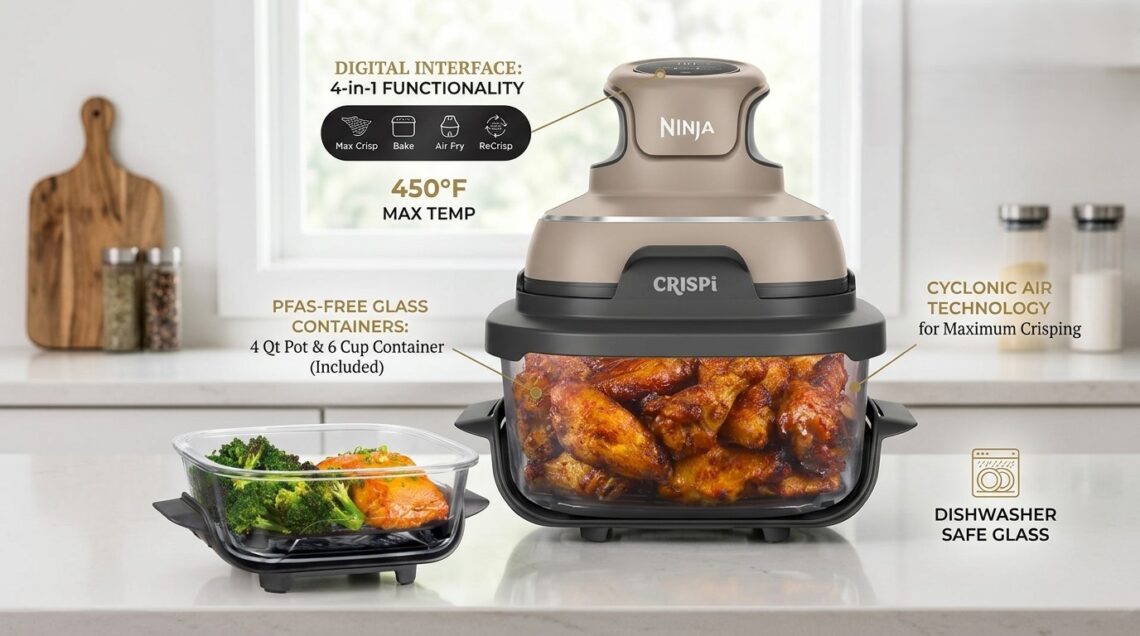
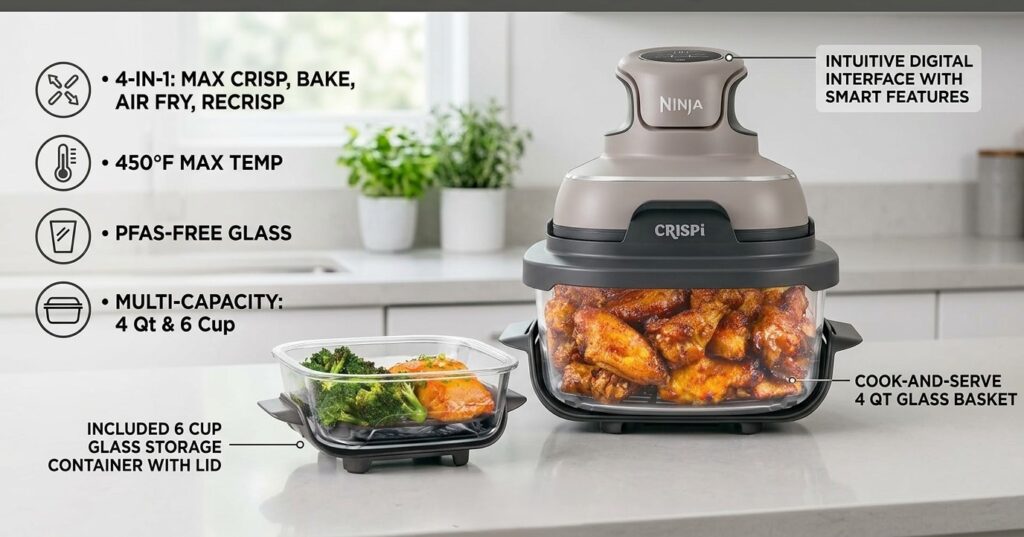
The Ninja Crispi operates on this principle but with some additional capabilities built in. The unit includes settings for air frying, baking, recrisping, and general crisping, which expands its functionality beyond traditional single-purpose air fryers. A maximum temperature of 450°F gives it range comparable to most modern air fryer models.
Key Features Explained
The Dual Container System
One of the distinguishing aspects of this model is its inclusion of two containers: a 4-quart capacity vessel and a 6-cup option. This dual-container approach means you’re not limited to one size for all cooking tasks. The larger container accommodates bigger portions or multiple items, while the smaller 6-cup container suits cooking for one or two people, reheating smaller portions, or preparing side dishes.
Having multiple basket sizes built into one unit eliminates a common limitation of traditional air fryers, where you’re committed to a single cooking chamber size. This flexibility can influence how efficiently you use the appliance for different types of meals.
Glass Construction Material
The use of glass for the containers represents a notable design choice. Glass allows you to monitor cooking progress without opening the unit, which can affect cooking times and results. Traditional stainless steel baskets require you to open the drawer or compartment, interrupting the cooking process and allowing heat to escape.
From a practical standpoint, glass also typically resists staining and odor absorption better than some other materials. Cleaning observation is easier, and you can see if food is browning appropriately as it cooks. The PFAS-free aspect is worth noting—PFAS (per- and polyfluoroalkyl substances) are chemicals sometimes used in non-stick coatings, and their exclusion is important to some consumers concerned about chemical exposure during cooking.
Temperature Range
The 450°F maximum temperature is sufficient for most air frying tasks. This temperature range covers everything from vegetables and proteins to baked goods and frozen foods. Standard cooking recommendations for air frying typically fall within or below this maximum, making it adequate for the vast majority of recipes you’ll encounter.
Multiple Cooking Modes
The device offers four functional modes: air frying, baking, recrisping, and crisping. Air frying is the primary function. Baking capability opens possibilities for cooking items that might not traditionally be associated with air fryer usage, such as certain baked goods or casseroles. Recrisping refers to restoring crispness to foods that have become soggy, and the dedicated crisping mode provides texture optimization for specific items.
How Air Fryer Cooking Actually Works in Practice
Understanding the practical side of using an air fryer is important for realistic expectations. Air fryers work best when food is arranged in a single layer without overcrowding the basket. When items are piled on top of each other, the air circulation becomes compromised, and you’ll get uneven cooking or less crispy results.
Cooking times vary based on several factors: the thickness of what you’re cooking, the starting temperature of the food, the quantity being prepared, and the specific model’s heating performance. A recipe that takes 12 minutes in someone else’s air fryer might take 15 in yours, so initial experimentation is normal.
Most foods benefit from a light coating of oil, despite the “oil-free” marketing often associated with air fryers. A small amount of oil creates better browning and texture than cooking without it entirely. The amount is substantially less than traditional deep frying, which is the primary advantage.
Exploring the Dual Container Advantage
The two-container system deserves more explanation because it addresses a real-world problem. Many households have varying cooking needs depending on who’s eating and what’s being prepared. A family of four might need the full 4-quart capacity for dinner, but when cooking for one or two people during the week, that large basket means wasted energy heating unnecessary space.
The 6-cup container addresses this by providing an option that’s more appropriately sized for smaller portions. From an energy efficiency perspective, using the smaller container when it’s sufficient makes practical sense. It also offers flexibility in meal preparation—you might cook different items simultaneously if you need to, using both containers for different foods at the same time.
Types of Food Suitable for Air Frying
The versatility of air fryer cooking extends quite broadly. Frozen vegetables, whether broccoli, Brussels sprouts, or green beans, cook well and develop nice browning. Proteins like chicken breast, salmon, and ground meat preparations work throughout the temperature range available. Potatoes—whether fries, wedges, or whole baby potatoes—are among the most popular air fryer foods.
Beyond savory applications, the baking mode opens possibilities for items like chicken nuggets, fish sticks, certain frozen bakery items, and even some fresh baked goods. Vegetables like zucchini, asparagus, and cauliflower can be prepared in ways that bring out their natural flavors through the high-heat cooking method.
The recrisping function addresses a specific problem: leftovers that have lost their initial texture. Pizza slices that have gone soft, fried chicken that’s cooled and become less crispy, or baked goods that have dried out can often be revived using the recrisping function.
Glass Containers: Practical Implications
While glass is more visible than metal, it does have some practical considerations. Glass containers are heavier than plastic or metal alternatives, which matters if you’re regularly removing and installing them for cleaning. The glass remains very hot immediately after cooking, similar to traditional cookware, so proper cooling time and caution when handling are necessary.
Cleaning glass containers is generally straightforward—they can typically go in the dishwasher and tend to resist staining from foods like tomato sauce or turmeric. However, glass is less durable than metal if it encounters hard impacts or is handled roughly.
Who This Appliance May Suit
An appliance like this can be practical for several types of users. People who cook frequently for varying group sizes benefit from the flexibility of two container options. Those interested in reducing oil consumption in their cooking may find value in air frying’s approach. Home cooks exploring different cooking methods beyond their traditional oven might appreciate having multiple modes in one unit.
Individuals with limited counter space might be interested in the multi-function aspect, as it consolidates air frying, baking, recrisping, and crisping into a single appliance rather than requiring separate devices.
Important Considerations Before Purchasing
Space Requirements
Like all air fryers, this unit requires counter space. It’s not a compact appliance, so ensuring you have adequate room is essential. Measurements would be worth checking against your available space before committing to purchase.
Learning Curve
While air fryers are relatively straightforward to use compared to other cooking equipment, they do require some adjustment if you’re accustomed to traditional oven cooking. Temperatures that work might need minor adjustments for your specific model, and recipes should be viewed as starting points rather than absolute instructions.
Noise Level
Most air fryers produce some noise due to the fan circulation required for their operation. If you’re sensitive to kitchen noise or have particular concerns about sound, this is worth considering.
Cleaning Requirements
Regular cleaning keeps an air fryer functioning optimally. The containers need to be washed after use, and the heating element area may occasionally require attention. This isn’t overly burdensome, but it should be factored into daily usage.
Durability Over Time
Like any appliance, long-term durability varies. Materials degrade with use, and heating elements can eventually fail. Purchasing from a reputable retailer often includes warranty options worth exploring.
Comparing Air Fryer Categories
When evaluating air fryers generally, several categories exist. Single-basket models offer simplicity and compactness but limited flexibility. Dual-basket models, which this falls into, provide more versatility at the cost of additional space. Larger capacity models serve people who regularly cook for groups. Some air fryers include additional attachments for specific cooking tasks, while others keep things simple.
Glass-basket air fryers are less common than stainless steel or plastic alternatives. Each material has trade-offs: glass allows visibility but is heavier, stainless steel is durable but you can’t see inside, and plastic is lightweight but may absorb odors over time.
The four-in-one functionality (air fry, bake, recrisp, crisp) expands beyond basic air fryer operation, though individual users may or may not utilize all four functions regularly.
Frequently Asked Questions
How much electricity does an air fryer use?
Air fryers typically consume between 800-1500 watts depending on the model and mode. They use less energy than a traditional oven for cooking smaller quantities, though exact consumption depends on usage patterns and frequency.
Can you cook everything in an air fryer that you can cook in an oven?
Most foods can be adapted to air fryer cooking, but not everything transfers directly. Foods requiring specific humidity levels or moisture conditions may produce different results. Liquid-heavy dishes like soups don’t work well in air fryers. However, many oven recipes can be adapted by reducing temperature slightly and checking for doneness earlier than traditional timings suggest.
Is air fryer food actually healthier?
Air frying reduces the amount of oil needed compared to deep frying, which reduces overall fat and calorie content for certain foods. Whether that constitutes “healthier” depends on what’s being cooked and your overall dietary goals. Air frying doesn’t fundamentally change the nutritional profile of ingredients themselves.
What’s the difference between air frying and baking in a traditional oven?
The primary difference is heat circulation and intensity. Air fryers use rapid air circulation and higher temperatures in smaller spaces, which typically produces crispier results faster. Ovens use more gentle, ambient heat. Some baked goods benefit from oven baking’s milder approach, while items seeking crispness benefit from air fryer cooking.
Do the two containers cook differently?
The different sizes shouldn’t significantly impact how food cooks qualitatively, though cooking times might vary slightly based on how items are arranged. The 6-cup container cooks a proportionally smaller volume, so cooking times would typically be somewhat shorter than filling the larger 4-quart container completely.
How often should you clean an air fryer?
It’s best to clean containers and any removable parts after each use to prevent buildup. The heating element area should be cleaned periodically, and many manufacturers provide specific guidance for their models.
Can you stack food in air fryer baskets?
Stacking is possible but typically results in less even cooking and reduced crispness. Arranging food in a single layer generally produces better results, though some denser items can handle minor stacking.
Final Thoughts
The Ninja Crispi Glass Air Fryer represents a multi-function appliance for people interested in air fryer cooking with some additional versatility built in. The dual container system addresses real-world cooking needs for varying portion sizes, the glass construction offers visibility benefits, and the multiple cooking modes expand its functionality beyond basic air frying.
Whether an appliance like this aligns with your cooking needs, kitchen space, and usage patterns depends on your individual circumstances. Those who cook for varying group sizes and appreciate having options within a single appliance may find the design appealing. Others who prefer simplicity or have limited counter space might opt for more basic models.
Any new appliance requires an adjustment period as you learn its specific quirks and timing. Reviews from actual users can provide additional perspective on performance and durability, and checking warranty information gives you understanding of what’s covered should issues arise.