Introduction
The landscape of kitchen appliances has shifted considerably over the past decade, with multi-function cookers becoming increasingly popular among home cooks seeking convenience without sacrificing cooking quality. Among these devices, the Instant Pot brand has built a substantial following, particularly with their Duo line of products. The 7-in-1 Mini model represents a specific approach to multi-function cooking—combining several cooking methods into a compact unit designed for smaller households or those with limited kitchen space.
Understanding what a multi-function electric cooker can do, how it works, and whether it aligns with your cooking habits requires looking beyond marketing language. This guide explores the Instant Pot Duo 7-in-1 Mini from a practical standpoint, examining its capabilities, real-world applications, and the considerations worth thinking through before deciding if it’s right for your kitchen.
What Does a 7-in-1 Cooker Actually Mean?
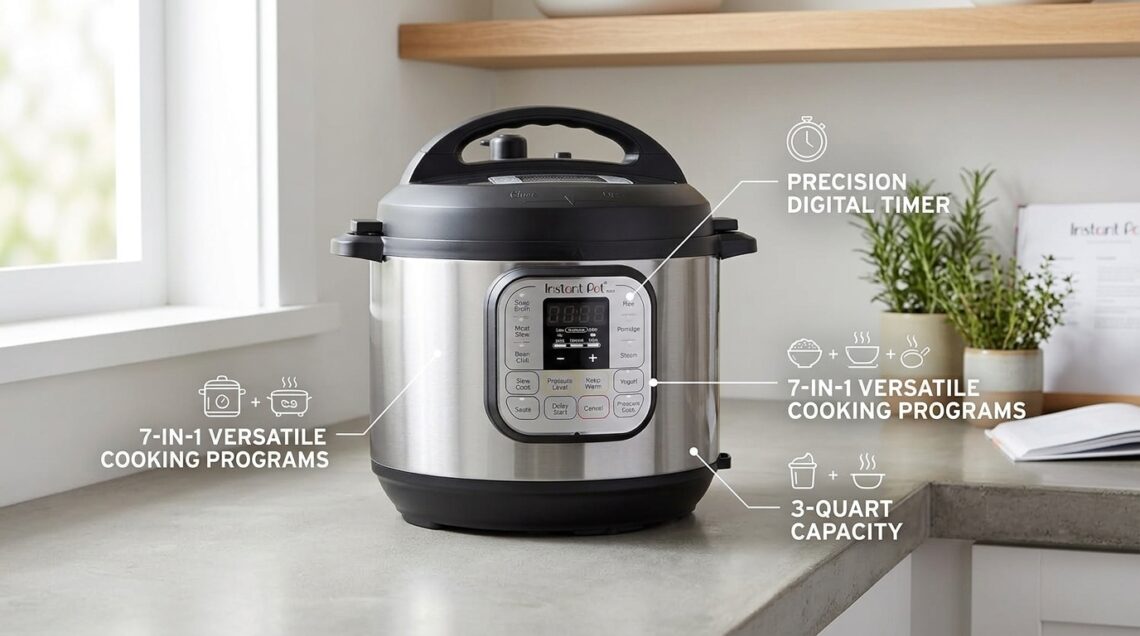
The “7-in-1” designation refers to seven distinct cooking functions available in a single appliance. Understanding each function helps you determine whether the device can handle your typical cooking tasks.
Pressure cooking is perhaps the most recognized function of these devices. Electric pressure cookers work by trapping steam inside a sealed chamber, raising the temperature above normal boiling point and reducing cooking times significantly. A pot roast that typically requires three hours of traditional braising can be ready in under an hour with pressure cooking, though the actual time savings depend on the specific recipe and ingredients involved.
Slow cooking allows the appliance to function as a traditional slow cooker, maintaining low temperatures over extended periods. This setting suits recipes that benefit from long, gentle cooking at lower temperatures—think chili, stews, or shredded meats for pulled pork sandwiches.
Sauté mode lets you brown ingredients directly in the inner pot before pressure cooking begins. This step, known as browning or searing, develops deeper flavors through the Maillard reaction. Rather than dirtying a separate pan, you can accomplish this step inside the cooker itself, making cleanup more straightforward.
Steaming uses a rack and steam to cook ingredients without direct contact with liquid. This method preserves more nutrients and works well for vegetables, dumplings, or seafood preparations.
Rice cooking provides a specific setting optimized for preparing rice with proper texture and moisture content. The cooker monitors steam release and maintains appropriate temperatures to avoid both undercooked and mushy results.
Yogurt making maintains warm temperatures needed for culturing yogurt at home. This function typically involves heating milk to a specific temperature, adding cultures, and maintaining that temperature for several hours while fermentation occurs.
Warming keeps cooked food at a safe serving temperature without continuing to cook it further, useful for keeping food ready until all components of a meal are prepared.
This combination approach means a single appliance can handle various cooking methods that would traditionally require multiple separate devices—a pressure cooker, a slow cooker, a steamer, a rice cooker, perhaps a yogurt maker, and a warming function.
Key Features of the 7-in-1 Mini Model
Beyond the cooking functions themselves, several specific features characterize this version of the Instant Pot Duo line.
The 3-quart capacity represents the defining size characteristic. Standard Instant Pot models typically come in either 6-quart or 8-quart options. The 3-quart size splits the difference, offering more capacity than personal-use devices while taking up notably less counter and storage space than full-size models. For individuals cooking for one or two people, or for smaller household portions, this mid-range size often proves more practical than larger alternatives. Conversely, those regularly cooking for four or more people might find themselves limited by the smaller capacity.
Stainless steel construction contributes to durability and ease of cleaning compared to non-stick alternatives. Stainless steel resists staining and maintains its appearance over time, though it does require occasional attention to maintain its shine if that matters to you.
The included recipe application provides access to over 1,900 recipes optimized specifically for pressure cooking and other functions. Having recipes readily available reduces the barrier to using the various cooking functions beyond basic pressure cooking. The app often includes ingredient lists, step-by-step instructions, and information about which cooking function to use.
Dual pressure settings (found on most Duo models) typically include high pressure for recipes that need faster cooking and low pressure for more delicate ingredients that might break apart or become mushy under high pressure.
Quick release and natural release options give you flexibility in how pressure is released from the cooker after cooking completes. Quick release vents steam immediately, while natural release allows pressure to decrease gradually as the cooker cools. Different recipes benefit from different approaches—natural release often produces more tender results, while quick release prevents food from continuing to cook in residual heat.
How the 7-in-1 Mini Actually Works in Practice
Understanding the mechanical reality of how these cookers function helps set realistic expectations about what they can accomplish.
When operating in pressure cooking mode, the sealed chamber traps steam, raising the internal pressure and temperature. This higher temperature allows food to cook faster than it would in boiling water. However, pressure cooking isn’t universally better than other cooking methods. Some foods, like pasta or certain vegetables, don’t necessarily benefit from pressure cooking and may actually cook less evenly than with traditional methods.
The sauté function heats the cooking vessel using electrical coils, allowing browning before pressure cooking begins. This step can add complexity to the cooking process but eliminates the need to use a separate pan.
For slow cooking, the device maintains lower temperatures over extended periods. While this works adequately for many slow-cooked recipes, some cooks find that traditional slow cookers, which surround the cooking vessel with heat on multiple sides, distribute heat more evenly than an electric cooker that typically heats from the bottom.
Steaming relies on raising the water inside the cooker to create steam without the pressure buildup of pressure cooking mode. A steam rack keeps ingredients above the water level.
Each function operates independently, which means you cannot layer multiple cooking methods—you’re not pressure cooking something and then immediately slow cooking it. You must choose one function per cooking session.
Practical Applications and Cooking Scenarios
The real value of any kitchen appliance becomes apparent when considering actual cooking situations. Let’s examine how the 7-in-1 Mini might fit into different meal preparation scenarios.
Weeknight dinner preparation is often cited as a primary use case. Someone cooking after work might pressure cook chicken and vegetables, which could be ready in 20-30 minutes from start to finish, substantially less time than traditional roasting or stovetop simmering. The sauté function allows browning ingredients beforehand, developing more complex flavors than simply dumping raw ingredients into the cooker.
Batch cooking and meal prep benefit from the cooker’s ability to handle larger-than-individual quantities while still requiring less active cooking time than stovetop methods. Someone might pressure cook a large batch of beans, which would typically require soaking and lengthy cooking time through traditional methods. Similarly, tenderizing tougher, less expensive cuts of meat for shredding works well under pressure.
Rice and grains present a compelling use case for the dedicated rice setting. Instead of monitoring a pot on the stovetop, watching for boiling points, adjusting heat, and timing, the rice function handles these variables automatically. This is particularly valuable for grains like quinoa or brown rice, which many cooks find temperamental when prepared conventionally.
Yogurt making appeals to those interested in controlling ingredients or reducing packaging waste from store-bought yogurt. The maintain-warm function creates the stable temperature environment that cultures need to develop. Someone inclined toward this application would need appropriate containers and cultures, adding an extra step compared to simply cooking, but the functionality is there.
Steaming vegetables preserves nutrients and works well for batch cooking vegetables for the week ahead. Prepping multiple portions of steamed broccoli, green beans, or other vegetables once can support multiple meals throughout the week.
Entertaining and meal planning can benefit from the warming function, which allows you to prepare a main dish in advance and keep it at safe serving temperatures while finishing side dishes or waiting for guests.
Conversely, some cooking scenarios don’t necessarily align well with what an electric pressure cooker does effectively. Recipes requiring precise temperature control, like candy making or deep-frying, don’t have dedicated functions. Foods that cook best quickly—like pan-seared fish or stir-fries—typically don’t benefit from pressure cooking. Recipes requiring traditional browned crusts or specific texture development that relies on dry-heat cooking methods may not translate as well to a pressure cooker environment.
Who May Find This Appliance Useful
The suitability of a 7-in-1 Mini varies significantly based on household size, cooking habits, and available kitchen space.
Small households and individuals represent a natural fit for the 3-quart capacity. Two people, or an individual who cooks in batches, can use this size without significant oversupply or waste. The smaller footprint also appeals to those in apartments, condos, or kitchens with limited counter space.
Health-conscious cooks interested in meal preparation and batch cooking might find the time-saving aspects valuable, particularly for preparing proteins and grains in advance.
Home cooks exploring different cuisines might appreciate the variety of recipes available through the included app, particularly those interested in pressure-cooking methods common in cuisines like Indian cooking, Brazilian cooking, or other traditions where pressure cooking is prevalent.
Environmentally minded individuals concerned about food waste might appreciate the ability to use less expensive, tougher cuts of meat and make them tender, or to prepare dried beans and legumes from scratch rather than canned alternatives.
People seeking to reduce kitchen clutter while maintaining functionality might see value in consolidating seven functions into one device rather than maintaining separate appliances.
However, the device may not align as well with other household situations. Those who regularly cook for four or more people might find the 3-quart capacity limiting. Cooks with strong preferences for specific cooking methods—those who prioritize high-heat wok cooking, for instance, or who rely heavily on traditional oven cooking—might not use many of the available functions. Those with already-full kitchens might view adding even a compact appliance as counterproductive.
Important Considerations and Realistic Assessment
Examining potential drawbacks alongside advantages provides a more complete picture.
Learning curve exists with any new appliance. Understanding pressure release methods, appropriate liquid ratios for different foods, and function-specific adjustments requires learning. The included app helps, but some experimentation with existing recipes may prove necessary to achieve preferred results. Additionally, not all traditional recipes translate directly to pressure cooking—adapting them requires either consulting pressure-cooking-specific resources or experimenting.
Capacity limitations mean that larger families or batch cooking for significant time periods ahead might need to make multiple batches, negating some time-saving benefits.
Seal maintenance is necessary for reliable operation. The rubber gasket that creates the seal eventually requires replacement, adding an ongoing cost beyond the initial purchase.
Limited browning capability through sauté mode is noticeable compared to using a traditional pan or Dutch oven. The sauté function works adequately but may not develop browning as thoroughly as dedicated high-heat pans.
Slow cooking efficiency has generated discussion among cooking enthusiasts. While the slow cooking function works, some cooks report that traditional slow cookers, which generate heat from multiple directions rather than primarily from the bottom, distribute heat more evenly for certain slow-cooked recipes.
Space requirements extend beyond just the appliance footprint. The cooker requires space around it for safety—it shouldn’t be placed directly under cabinets, for instance, since steam is released during cooking. Additionally, the accessories and parts require storage.
Noise generation during operation is something to consider, particularly if cooking during early morning or late evening hours. The cooker produces steam-related sounds and occasional beeping notifications.
Warranty and longevity vary depending on where you source the appliance. Understanding the warranty coverage and expected lifespan helps inform the investment decision.
Comparing Electric Pressure Cooking to Other Methods
Situating the electric pressure cooker within the broader landscape of cooking methods provides helpful context.
Traditional stovetop pressure cookers operate on the same basic principle—raising temperature through trapped steam—but they require more attentive monitoring and manual pressure release. Electric versions automate many aspects of this process, reducing the learning curve and active oversight required.
Slow cookers operate at lower temperatures over extended periods. Both slow cookers and pressure cookers can tenderize tough cuts of meat, but they achieve this through different mechanisms. Slow cookers excel at developing rich flavors through extended cooking time, while pressure cookers prioritize speed.
Conventional ovens provide precise temperature control and excel at recipes requiring dry heat, browning development, or specific roasting temperatures. They remain unsurpassed for certain applications, though they typically require more energy and time for many tasks.
Instant-read thermometers and other stovetop methods offer flexibility and precision that automated cookers cannot replicate. For some cooks and recipes, this flexibility represents a critical advantage.
Rice cookers and separate yogurt makers provide specialized functionality optimized for specific tasks. Some cooks find dedicated appliances outperform multi-function devices at individual tasks.
The reality is that electric pressure cookers represent one point on a spectrum of cooking tools, each with distinct advantages depending on your specific needs and preferences.
Frequently Asked Questions
What types of foods cook particularly well in an electric pressure cooker?
Tougher cuts of meat, dried legumes and beans, root vegetables, and grains like rice and quinoa cook particularly efficiently under pressure. Anything that typically requires extended cooking time to become tender or fully cooked responds well to pressure cooking.
Is it necessary to use the included app and recipes?
The app provides convenience and recipe inspiration, but it’s not strictly necessary. Pressure cooking resources exist throughout the internet, in cookbooks, and through various cooking websites. The app simply provides one readily available resource.
How does the 3-quart capacity compare to full-size pressure cookers?
The 3-quart size holds significantly less than 6-quart or 8-quart models. For a single person or two-person household, this often proves ideal. For larger families or extensive batch cooking, the smaller capacity means multiple batches for some recipes.
Does the stainless steel interior require special cleaning?
Stainless steel is relatively easy to maintain. Normal washing works fine, though mineral deposits from water can leave marks that some people buff away with a cloth. It doesn’t require specialized cleaners.
Can you layer ingredients or cook multiple components simultaneously?
The cooker functions as a single-environment chamber. You’re cooking everything using one function, at one temperature setting, for one duration. Some recipes involve layering ingredients that cook at different rates, but they all cook under the same pressure setting simultaneously.
What’s the difference between quick release and natural release?
Quick release immediately vents steam, stopping the cooking process. Natural release allows pressure to decrease gradually as the cooker cools. Different recipes benefit from different approaches—natural release typically prevents foods from continuing to cook in retained heat, while quick release stops cooking immediately.
How much liquid does the pressure cooker require?
Different functions require different minimum liquid amounts for proper operation. Pressure cooking typically requires less liquid than stovetop cooking because there’s no evaporation. The included app and instructions provide guidance on liquid ratios for various recipe types.
Does the appliance reduce cooking time for all foods?
Pressure cooking provides the most significant time reduction for foods that normally require extended cooking—beans, tough meats, certain grains. Foods that cook quickly through conventional methods may not benefit substantially from pressure cooking.
Is learning to use an electric pressure cooker difficult?
The basics are relatively straightforward—add ingredients, seal the lid, select a function and time, and allow cooking to complete. Understanding nuances like appropriate liquid ratios, pressure release methods, and recipe adaptation requires some learning, which the included app and instructions help facilitate.
What maintenance does the appliance require?
Regular cleaning is similar to any cookware. The rubber gasket occasionally requires attention and eventually needs replacement. Checking that the steam release valve functions properly is part of routine maintenance.
Final Thoughts
The Instant Pot Duo 7-in-1 Mini represents a specific approach to kitchen efficiency—consolidating multiple cooking functions into a compact, automated appliance designed for smaller households. Whether it proves valuable depends entirely on your particular cooking habits, household size, available space, and cooking preferences.
For someone interested in reducing cooking time for meals, exploring different cuisines that traditionally use pressure cooking, or managing meal preparation more efficiently, the capabilities provided by this appliance can support those goals. Conversely, for cooks with different priorities—those who emphasize precision, specific texture development, or traditional cooking methods—it might remain largely unused.
The reality of any appliance purchase involves honest assessment of your actual usage patterns rather than aspirational cooking fantasies. Consider what you actually cook most frequently, how much counter space you can realistically dedicate to the appliance, and whether the specific functions align with your typical meal preparation.
The included recipe application, stainless steel construction, variety of cooking functions, and appropriately sized 3-quart capacity address the needs of a specific household situation effectively. Whether that situation matches yours requires personal evaluation of your unique circumstances.